September is Falls Prevention Awareness Month
Falls are one of the most common safety concerns for older adults, but many falls can be prevented with a few simple changes at home.
From better lighting and safer footwear to medication reviews and keeping walkways clear, small steps can make a meaningful difference in helping seniors stay safe, confident, and independent.
Why Fall Prevention Matters
As summer turns to fall, September is the perfect time to take a fresh look at safety around the home. Falls can have a major impact on an older adult’s health, confidence, and ability to remain independent. The encouraging news is that many falls can be prevented.
This month, our Senior Resource Guide focuses on simple steps seniors and families can take to reduce fall risks and make home a safer place.
Start With a Fall-Safety Walk Through the Home
Sometimes the biggest fall risks are things we see every day and no longer notice. Take a few minutes this month to walk through the home with fresh eyes.
🏠 Floors & Walkways
- Remove clutter from walking paths
- Secure or remove loose throw rugs
- Keep electrical cords away from walkways
- Clean up spills promptly
- Keep frequently used paths open and easy to navigate
🪜 Stairs
- Keep stairs free of shoes, bags, and other objects
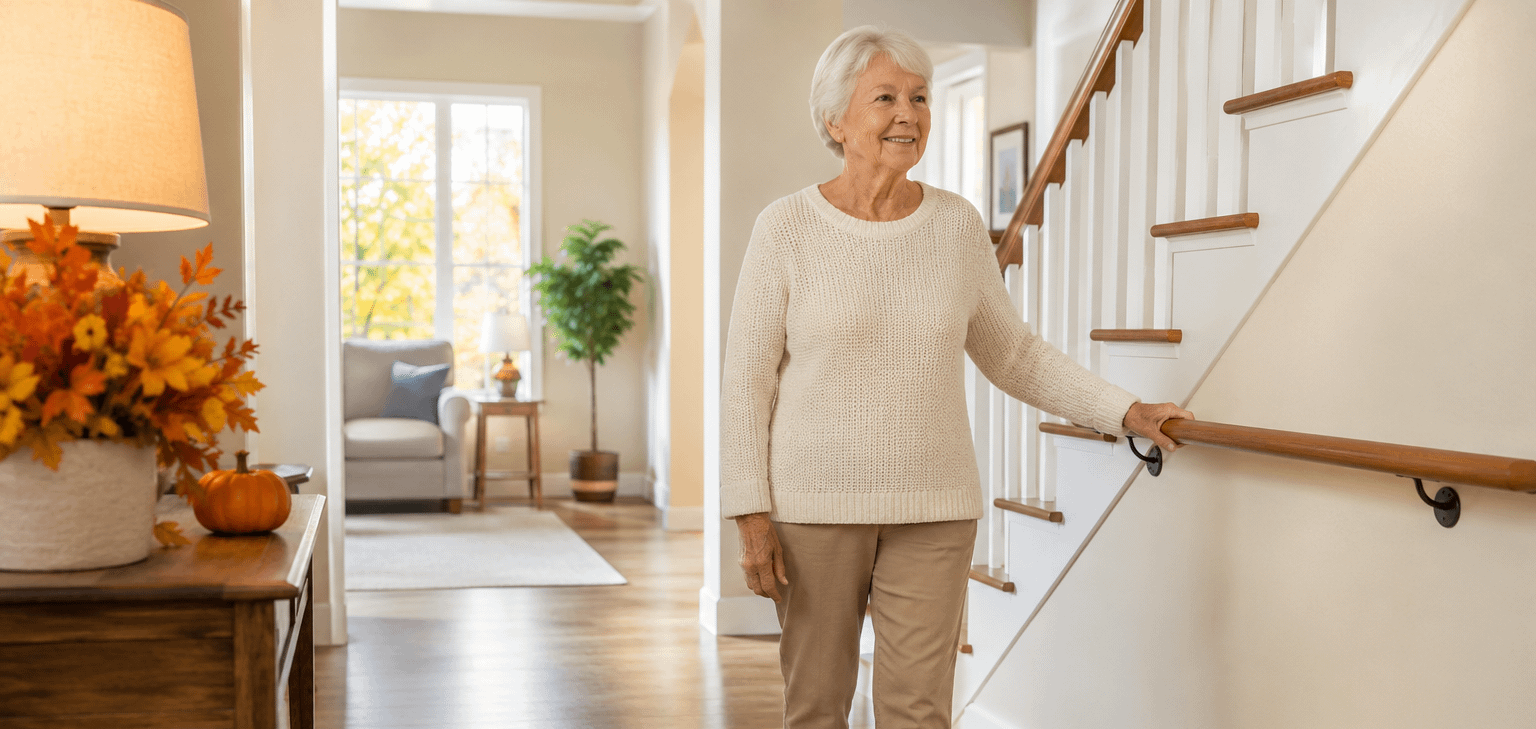
- Make sure handrails are sturdy
- Add railings where needed
- Check that stairways are well lit
- Repair loose or uneven steps
🚿 Bathroom
- Consider grab bars near the toilet and shower
- Use a non-slip surface in the tub or shower
- Keep toiletries within easy reach
- Consider a shower chair if standing is difficult
🛏️ Bedroom
- Keep a lamp or light switch within reach of the bed
- Keep the path to the bathroom clear
- Avoid getting up quickly after lying down
- Keep a phone nearby when possible
🍂 Outside the Home
- Check porches, steps, and railings
- Repair cracked or uneven walkways
- Make sure entrances are well lit
- Keep leaves and debris off walkways
- Be especially careful when surfaces are wet
💡 Don’t Forget About Lighting
As fall approaches, daylight hours begin getting shorter. Poor lighting can make it harder to see steps, furniture, cords, pets, and changes in flooring.
- Nightlights in hallways and bathrooms
- Brighter bulbs where appropriate
- Motion-activated lighting near entrances
- Lamps near beds and frequently used chairs
- Additional lighting around stairs
Personal Factors That Can Affect Fall Risk
👟 Shoes Matter
Slippers, socks, and shoes that do not fit properly can increase the chance of slipping or tripping.
- Choose shoes that fit securely
- Look for good traction
- Avoid loose slippers
- Be careful walking in socks on smooth floors
💊 Medication & Balance
Some prescription and over-the-counter medications may cause dizziness, drowsiness, weakness, changes in blood pressure, or balance problems.
Ask a doctor or pharmacist to periodically review medications, including over-the-counter products and supplements.
Never stop taking a prescribed medication without first talking with a healthcare professional.
👓 Vision & Hearing
Changes in vision can make it harder to judge steps, curbs, flooring changes, distance, and uneven surfaces.
Regular eye exams and updated prescriptions can help support safer movement around the home. Hearing changes can also affect awareness of what is happening nearby.
🚶 Staying Active Can Help
Avoiding movement because of a fear of falling can sometimes have the opposite effect. When we become less active, muscles can become weaker and balance may decline.
Depending on health and ability, helpful activities may include:
Talk with a healthcare provider before beginning a new exercise program if there are health or mobility concerns.
⚠️ Signs It May Be Time to Take a Closer Look
Family members may begin noticing changes before an older adult mentions them. Pay attention if someone:
- Has fallen recently
- Frequently loses balance
- Holds onto walls or furniture while walking
- Has difficulty getting up from a chair
- Avoids stairs they previously used
- Seems unsteady when first standing
- Limits activities because of fear of falling
- Has unexplained bruises
- Has difficulty getting in or out of the shower
- Struggles on uneven surfaces
These changes do not automatically mean someone can no longer live independently. They may simply mean it is time to identify where a little additional support could help.
Printable Resource
September Fall-Safety Checklist
Use this quick checklist to walk through the home and identify simple changes that may help reduce fall risks.
- ☐ Inspect outdoor steps and handrails
- ☐ Clear walkways before leaves accumulate
- ☐ Replace flashlight batteries
- ☐ Review medications
- ☐ Check shoes for worn or slippery soles
- ☐ Improve lighting around entrances
- ☐ Check smoke and carbon monoxide detectors
- ☐ Review emergency contacts
- ☐ Schedule overdue vision or hearing appointments
- ☐ Avoid using step stools for everyday items
Helpful Fall-Prevention Resources
National Council on Aging
Falls Free® CheckUp
A short online questionnaire that helps older adults identify common fall risks and receive personalized suggestions.
Take the Falls Free® CheckUp →CDC
Older Adult Fall Prevention
Fall-prevention information and practical guidance for older adults, caregivers, and families.
Visit CDC Fall Prevention →Local Programs
Senior Centers & Recreation
Ask local senior centers and parks and recreation programs about balance classes, tai chi, chair exercise, senior fitness, and wellness programs.
When a Little Help Can Make a Big Difference
Helping Seniors Stay Safe at Home
Sometimes preventing a fall is not about making a major change. It can simply mean having someone there to help with everyday tasks and provide support where it is needed.
Home Sweet Home Care provides non-medical companion and personal care services to help seniors remain safe, comfortable, and independent in their own homes.
Companion Care
- Meal preparation
- Light housekeeping
- Laundry
- Errands
- Transportation
- Medication reminders
- Companionship
- General safety oversight
Personal Care
- Bathing
- Dressing
- Toileting
- Personal hygiene
- Mobility and transfers
- Incontinence care
- Assistance with eating when needed
Save & Share This Guide
A simple safety tip could help prevent a serious fall. Please feel free to save, print, email, or share this month’s guide with an older adult, family caregiver, friend, or neighbor.
